 Ashleigh Whaley
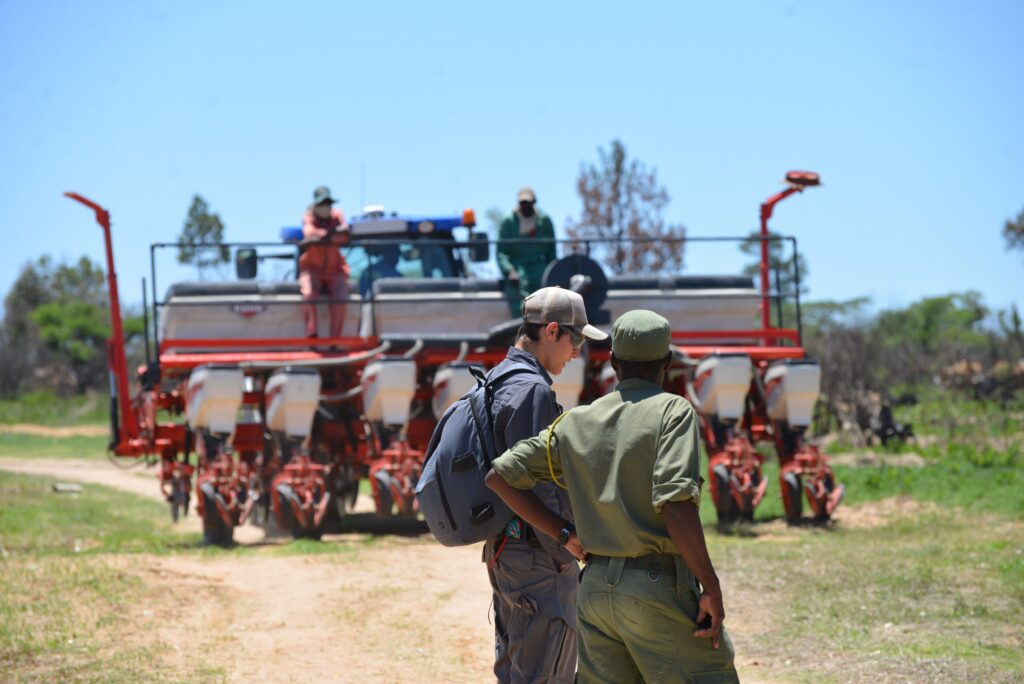
When my children reached their high school years, they needed two foreign language credits for their American high school diploma. Living on a farm in Zimbabwe, the obvious choice was Shona, the language they’d been surrounded by since they were tiny.
A motorbike challenge
When they were about eight and ten, they still struggled to speak Shona. So I made them an offer: “When you can speak the language well, come to me and I’ll buy you a motorbike.”

Within six months, they came back asking for a spoken Shona test. They passed with flying colours, and each got a brand-new motorbike! Since then their Shona has only grown stronger. Today they can hold a conversation with anyone, even the cheeky policeman at a roadblock!
The missing piece: reading and writing
Speaking earned them the first credit. For the second credit, they needed to read and write Shona to the standard our ACE programme requires.
I searched for a suitable course and kept hitting the same problems:
- The Zimbabwean junior school courses came with huge books and no score key for marking.
- Many reading books focused on the spiritual side of Shona culture, including ancestral spirits, which I wasn’t comfortable with.
So I wrote my own
I turned to the easy-to-read Shona Bible we use on the farm and hand out to our workers. From it I built a 12-step course that fits comfortably into one school year, with each step done whenever you have the time.
Learning through Scripture matters deeply to me. I believe that when we weave God’s Word into our children’s learning, it blesses them and strengthens their minds as well as their hearts.
What’s inside the course
The course uses the Bhaibheri Dzvene and keeps to everyday Shona rather than deep, formal Shona. It’s split into 12 stages, and each stage ends with its own test, either multiple choice or written, with a score key so you can mark it quickly and fairly.
Designed to support a high school language credit
An American high school diploma usually needs two credits in a foreign language. In our family, the spoken Shona test earned the first credit (speaking) and this course earned the second (reading and writing). The course is designed to support the general content for Grades 10 to 12, so learners:
- Read stories, poems, news articles and other written texts, and answer questions on what they have read
- Show their speaking skills through a spoken Shona test (see below)
- Write stories, dialogues, book reviews, letters, poems, advertisements and more
- Build language skills that are woven through every activity
- Expand their knowledge of parts of speech, punctuation, idioms, homonyms, synonyms, antonyms, abbreviations, degrees of comparison and other language conventions
Together with the spoken test, the course covers all four areas of the curriculum:
- Listening and Speaking
- Reading and Viewing
- Writing and Presenting
- Language Structures and Conventions
How speaking is assessed
The course itself focuses on reading and writing, so it doesn’t include oral, play or conversation activities. Speaking is assessed separately with a spoken Shona test, just like the one my children took when they earned their motorbikes. To make this easy, I’ve created a free Shona Speaking Test PDF. It explains how to run the test at home, with conversation topics, a Bible story retell and a listening check, plus a score key and a score sheet to sign and keep in your child’s school file. You, or a fluent Shona speaker you trust, simply chat with your child in Shona and mark how confidently they speak and understand.
Get your free Shona Speaking Test: pop your email address in below and I’ll send the PDF straight to your inbox.

Every exercise has an answer key, so you’re never left guessing whether an answer is right.
Fitting it into your week
You don’t need hours of spare time or a teaching qualification to use this course. The hardest part of keeping a home language going is staying consistent, so the course gives your family a simple plan: small, clear stages with a test at the end of each. Work through a stage when it suits your family, whether that’s a little each day or a longer session once a week. When your child finishes a stage, sit down together, do the test and mark it with the score key. Then talk through anything they got wrong before moving on. It’s a lovely chance to read God’s Word together in Shona, and to hear your child’s confidence grow with every stage.
Why I’m sharing it
Not long ago, a school group visited our farm. Many of the children couldn’t speak Shona, and one Zimbabwean child asked my son what a badza was! He was astonished, as a badza is something every rural Zimbabwean family has at home, and for generations every Zimbabwean, whether Shona- or English-speaking, has known the word. It showed me how quickly Shona is being lost, especially as more families move away from rural life.
It’s even harder for Zimbabwean families in South Africa, the UK, Australia, the USA and further afield. Children understand Shona at home, but English takes over at school and with friends. By the teenage years many feel shy to use it, and visits home become awkward when they can’t chat freely with gogo or read a message from family. Before long, English is the only language left in the house.
When I looked at what was available, most Shona courses were for complete beginners learning greetings and numbers, or for very young children. There was nothing for the teenager or adult who already speaks Shona but has never learned to read and write it. That’s exactly who this course is for: you speak it, now read and write it.
Who it’s for
I wrote it for my own teenagers, but it suits anyone aged 12 and up, adults included. It works for those who speak Shona as their first language and for those learning it as a second language. Whether your family lives in Harare, Johannesburg or London, it’s a gentle way to bring reading and writing Shona into your home.
Because every lesson is built on Scripture, your children will be growing in God’s Word at the same time as they grow in their language.
A bonus
Once a child masters a second language, the third and fourth come more easily. Once my children finish Shona, they plan to start Spanish, as they hope to work in Spanish-speaking countries one day.
Questions parents often ask
Which Bible does the course use?
The Bhaibheri Dzvene, the Shona Bible.
What level is it?
Basic, everyday Shona, not deep Shona. It’s ideal as a first reading and writing course.
How long does it take?
The 12 stages fit comfortably into one school year, but you can work at your own pace.
Will it count towards a high school language credit?
It’s designed to. Together with the spoken Shona test, it covers the listening, speaking, reading and writing skills of a Grades 10 to 12 language course, and that’s how my own children earned their two foreign language credits. Credits are awarded by the school or umbrella programme that issues the diploma, so check with yours using the list above.
Be the first to know
The course is coming soon. To be the first to hear when it’s released, sign up for the free Shona Speaking Test above. You’ll get the PDF straight away, and I’ll let you know the moment the course is ready.
I’d love to hear from you: does someone in your family speak Shona but struggle to read or write it? Leave a comment with a number and I’ll email you a free sample lesson when it’s ready:
1️⃣ My teen (12+)
2️⃣ Me, as an adult
3️⃣ Our church or Sunday school group
Does your family speak Shona at home, or are you trying to keep it alive from overseas? I’d love to hear your story in the comments below. 💬
Let’s keep the Shona language alive for generations to come. 🇿🇼
“And how hear we every man in our own tongue, wherein we were born?” Acts 2:8 (KJV)


You must be logged in to post a comment.